

How Martial Arts Turns "I Can’t" Into "I Can"
Many parents see the same pattern at home. A child says “I can’t” before even trying, melts down over a small mistake, or shuts down when school or activities feel hard. It is stressful to watch, especially when grades, new teachers, and busy schedules stack up.
Kids do not just wake up one day with strong confidence and self-esteem. These grow step by step, and they are related, but not the same thing. Martial arts can be a powerful place for that growth, and it usually changes one area before the other.
At our school in Franklin, we see quiet changes every week. Kids who would not make eye contact start volunteering to demonstrate. Children who used to give up after one failed attempt begin to try again on their own. Here, we will unpack what actually changes first in class, how you can support it at home, what to avoid saying, and how to tell if any martial arts program is truly building your child up.
Confidence vs. Self-Esteem on the Mat
We like to keep the difference between confidence and self-esteem very simple for parents.
- Confidence is “I can do this.”
- Self-esteem is “I am someone who can handle hard things.”
Confidence is task-based. A child believes they can do a front kick, tie their belt, or raise their hand in class because they have done it before. It grows through repetition, clear feedback, and small wins.
Self-esteem goes deeper. It is the inner sense that “I am capable, I am loved, I am the kind of person who keeps trying.” It grows through strong relationships, clear values, and how adults speak to a child about who they are, not just what they did.
In kids martial arts, confidence usually changes first. At the start, children learn specific, simple skills like:
- Basic stances
- Beginner blocks
- Straight punches
- Fundamental kicks
With a good curriculum, early drills are designed so most kids can succeed quickly. They earn stripes and new belts. They see progress in a very visible way. That concrete success is often the first crack in the “I can’t” wall.
Then something deeper starts to happen. If instructors only cheered for perfect kicks, kids would think, “I am good when I do this right.” But when instructors also say things like “You were really focused today,” or “You showed leadership helping that new student,” kids begin to connect effort and character to who they are.
Over time, the story in their head shifts from “I can do a front kick” to “I am someone who keeps going, even when I am nervous.” Our programs are built on that path, on purpose, so confidence in skills can grow into healthy self-esteem and leadership.
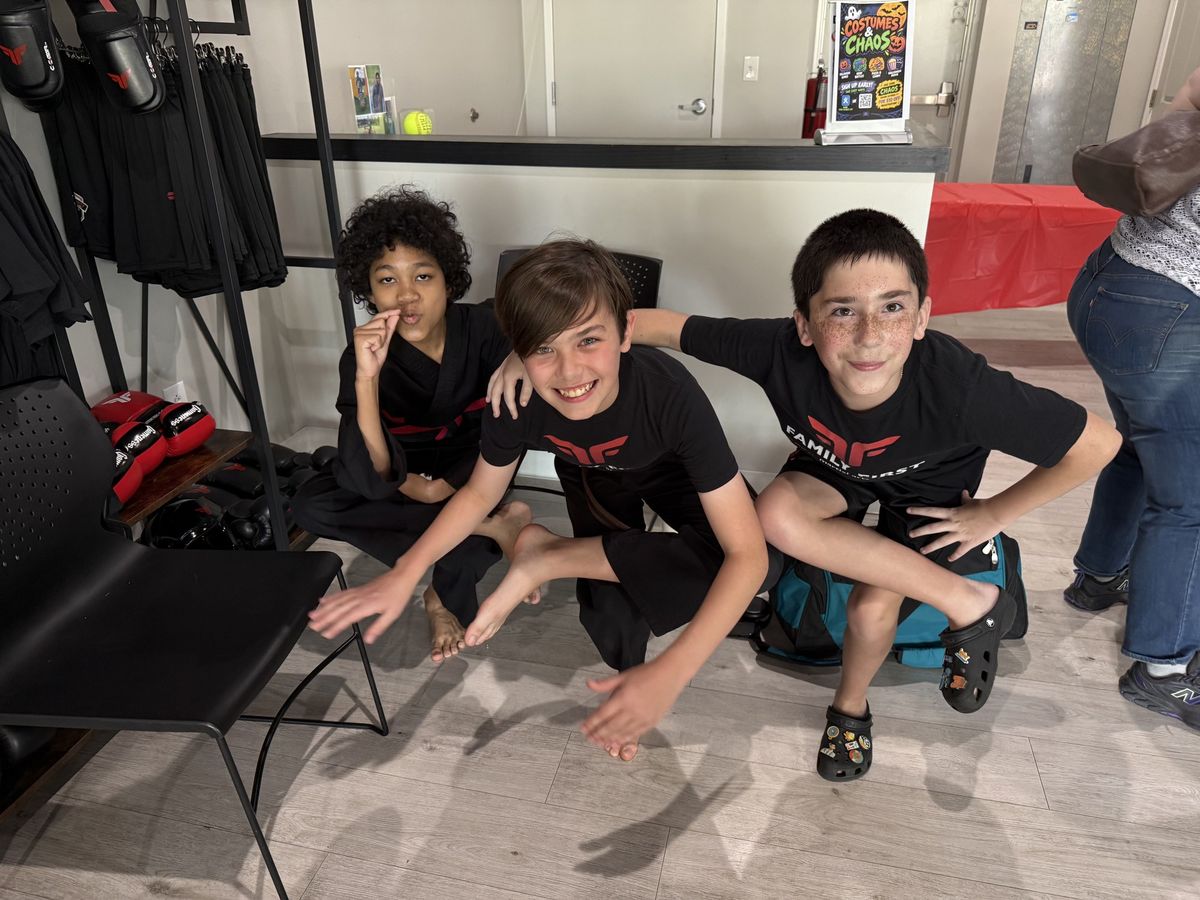
How Confidence-Building for Kids in Franklin, TN Really Works
Parents in Franklin juggle a lot for their kids. There is schoolwork, sports, screen time, friendships, and everything that comes with growing up. Many families want their kids to be confident but not entitled, brave but still kind and respectful.
Real confidence for kids is not about loud bragging or winning every time. It is about being able to say, “This is hard, but I can try.” In a family-focused martial arts setting, we build that kind of confidence through structure, relationships, and steady challenge.
Here is what that looks like:
- Structure and routine: Classes start and end in a similar way. Kids bow in, line up, warm up, and practice skills. That predictability helps anxious children feel safe, because they know what comes next.
- Right-sized challenges: The same drill will look different for a 5-year-old and a 12-year-old. Instructors adjust the level so shy kids, energetic kids, and perfectionists all have a chance to succeed and also stretch.
- Visible progress: Belts, stripes, and leadership chances like holding pads or leading a line give kids a ladder of “wins” they can see and feel.
Throughout all of this, character stays front and center. Instructors use kids’ names, make eye contact, and give clear, calm corrections. Respect is not just a word on the wall. It shows in how coaches and students talk to each other.
We also connect class lessons to real life. If we are working on focus, we might ask, “What does focus look like when your teacher is talking?” If the word of the week is self-control, we might talk about using it at the dinner table with siblings. Confidence then becomes a habit in daily life, not just a feeling on test day or belt day.
What Parents Can Do at Home to Support New Confidence
What happens at home can speed up or slow down the growth that starts in class. The good news is, you do not need to be a martial arts expert to help.
First, try to praise effort more than outcomes. Instead of only saying, “Great job getting your stripe,” you might say, “I saw you keep trying that kick even when it was hard.” This tells your child that hard work matters, not just the result.
Connect what you see in class to other parts of life:
- “You stayed calm with your little brother, that is the same self-control you use in class.”
- “You remembered to look at your teacher, just like when you stand in listening stance.”
Ask better questions after class too. Swap “Did you get a new belt?” for:
- “What is one thing you improved today?”
- “When did you feel proud of yourself in class?”
- “Was there anything that felt scary? How did you handle it?”
At home, a small, clear practice routine helps. Pick a safe spot and a short time, maybe 5 to 10 minutes, a few times a week. Keep it light and positive. You might say, “Show me something your instructors taught you,” instead of “You are doing it wrong.” Your job is to cheer effort and consistency, while the instructors guide the technique.
It also helps to partner with the teaching team. If your child is struggling with school anxiety, friendships, or behavior, share that. Instructors can then highlight certain skills on the mat, like staying calm when frustrated or using a strong, respectful voice, that may help in those areas too.
What Not to Say If You Want Real, Lasting Confidence
Even very loving parents sometimes use phrases that accidentally undercut confidence. It usually comes from a caring place, but the impact on a child is different than we intend.
Common examples that can backfire:
- “Do not be scared” or “There is nothing to be afraid of.” This can make kids feel wrong for being nervous.
- “You are the best one out there.” This puts pressure on them to always be number one and can make them fear failure.
- “That was easy for you.” This can cause kids to avoid harder things so they can stay “the kid who finds it easy.”
You can swap those with language that supports growth and healthy self-esteem:
- Instead of “Do not be scared,” try “It is okay to feel nervous. What is one small thing you can try anyway?”
- Instead of “You are the best,” try “I love how you kept going, even when it got tough.”
- Instead of “That was easy,” try “You worked hard to learn that. Ready for the next level?”
Another big one: avoid using martial arts as a threat or comparison. Saying “If you do not behave, I will tell your instructor,” or “Look how good your brother is at this,” can turn class into a punishment or a contest.
We want kids to feel that the mat is a safe place to grow, make mistakes, and learn respectful strength. Language that sounds like, “You are a hard worker,” or “You are a leader,” helps kids build an identity around character instead of just performance. When parents mirror that at home, confidence and self-esteem move together in a healthy way.
Spotting a Healthy Confidence-Building Program
When families in Franklin look at martial arts options, it helps to know what to look for if confidence-building is the goal.
Positive signs include:
- Instructors learn kids’ names quickly and use them with respect.
- There is a clear structure for progress, with both skill goals and character themes like focus or respect.
- Kids leave class looking a little more relaxed and proud, not tense or defeated.
Warning signs that a program might hurt confidence instead of building it:
- Constant yelling, public shaming, or sarcasm used as “motivation.”
- A heavy focus on toughness, winning, or “no mercy,” with little talk of kindness or respect.
- Kids dreading class, having stomach aches before class, or saying they feel “stupid” or “weak” after class.
At Family First Martial Arts in Franklin, TN, we build for long-term growth, not quick hype. Classes are grouped by age, with clear expectations and positive discipline. Older kids and teens can step into leadership roles, where they learn to help younger students and take responsibility in a healthy way.
We also work closely with families so parents can see progress, understand what we are working on, and keep the same messages going at home. When the school year feels stressful or a child is facing new challenges, the right training environment can turn that pressure into a turning point for courage, character, and real, lasting confidence.
Help Your Child Grow Stronger Inside And Out
If you are ready to see your child become more confident, focused, and resilient, we are here to help. At Family First Martial Arts – Franklin, our classes are designed to make confidence building for kids in Franklin, TN a natural part of every lesson. We combine age-appropriate challenges with positive encouragement so kids feel proud of their progress and excited to keep learning. Take the next step today and give your child the tools to thrive at home, at school, and in everyday life.


